
A seller removes their built-in stove the day before the keys are handed over, the buyer discovers holes in the countertop and an unconnected gas line. The notary receives a call, the bank freezes the release of funds, and everyone loses three weeks. This scenario occurs because no document precisely listed the items and equipment included in the sale. It can be avoided with a simple tool: a room-by-room contractual annex.
Room-by-room contractual annex: the missing tool in the sales agreement
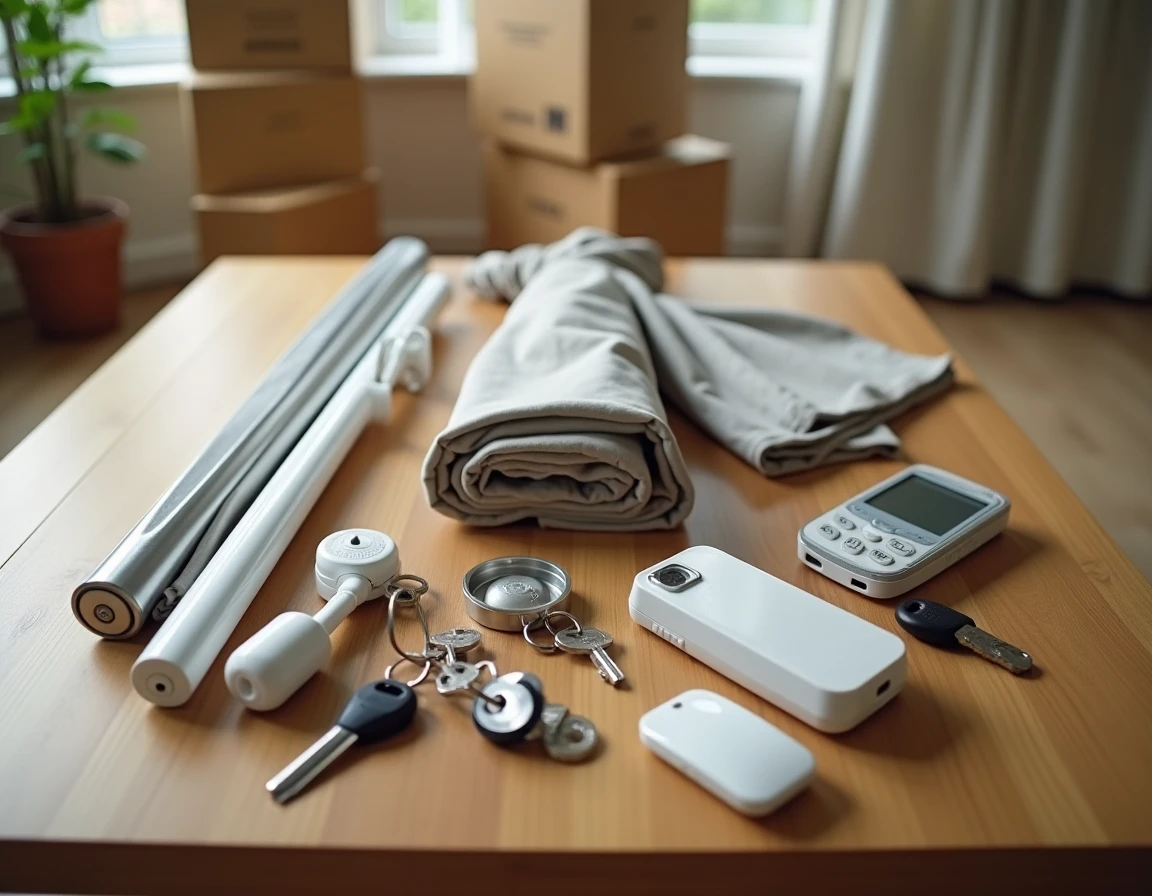
Most sales agreements mention the property “as is.” Some add a vague line like “equipped kitchen included.” This is far from a usable inventory in case of disagreement.
The idea is to produce a document as an annex to the agreement, organized by room (entry, kitchen, living room, each bedroom, bathroom, garage, outdoors), that lists each remaining item or piece of equipment. For each item: a short description, a dated photo, and a mention of the condition (new, good, worn, defective). Understanding what should be left when selling a house helps to compile this list without omitting anything.
This annex protects both the seller and the buyer. The seller proves what they have left. The buyer knows what they are receiving. The notary has a document in case of disputes regarding compliance with the delivery. The bank can verify that the property’s value corresponds to what was estimated during financing.
A recent boiler replacement with an older model, or the dismantling of a wood stove between the agreement and the deed, can be considered a breach of the obligation for compliant delivery. The buyer can then request a price reduction or restoration. The photographed annex cuts off any contestation.
Immovable by destination: items the seller cannot take

The Civil Code distinguishes between movable property (which can be moved freely) and immovable by destination. The latter are fixed to the building or specially adapted for it. They cannot be removed without the buyer’s consent, even if they were paid for by the seller.
Specifically, here is what the seller must leave in the property:
- Items fixed to the walls or floor: fireplaces, fixed radiators, boilers, convectors, moldings, glued or nailed flooring
- Custom integrated equipment: built-in kitchen, masonry dressing room, sink, fixed countertop, wall cabinets designed for the space
- Technical installations related to the building: electrical panel, sockets (part of the electrical installation), motorized roller shutters, automatic gate, connected water heater
Light bulbs, on the other hand, do not legally form part of the installation. They can be removed. In practice, leaving a property without light bulbs creates a bad impression during the exit inventory and fuels unnecessary tensions.
Case of home automation equipment
Home automation systems (connected thermostat, shutter control, built-in cameras) pose a less clear-cut question. If they are connected to the building’s electrical network and fixed, they are generally considered immovable by destination. If they operate on batteries or via Bluetooth, opinions vary on this point. The safest approach is to explicitly include or exclude them in the annex to the agreement.
List of items to leave by room when selling a house
To construct the annex, we proceed room by room. The goal is not theoretical exhaustiveness, but to cover the real friction points between sellers and buyers.
Kitchen
This is the room that generates the most disputes. Everything that is built-in stays: oven, cooktop, hood, integrated dishwasher. The refrigerator often poses a problem: if it is freestanding, it is movable. If it is integrated into a custom cabinet, it is considered immovable by destination. We photograph everything and specify the brand and year of purchase if known.
Living room
Fixed curtain rods, mounted shelves, and fireplace inserts remain. A TV stand placed on the floor goes with the seller. If an interior motorized blind is connected to the electrical network, it stays.
Bathroom
All fixed sanitary ware (shower, bathtub, sink, toilet, connected towel warmer) is part of the property. Mirrors glued to the wall are included as well. A vanity unit simply placed can be taken, unless it was custom-designed for the space.
Outdoors and garage
Plants in the ground, fences, the gate, and a garden shed fixed to a slab remain. A kit shed placed without a foundation is movable property. A built-in barbecue, cast in a slab, stays. A mobile barbecue on wheels goes.
Formalizing the list for the notary and the bank
The annex does not require heavy formalities, but a few precautions make it enforceable and useful.
- A table for each room with three columns: item, description, and condition, photo (referenced by number)
- Photos taken with a visible timestamp (most smartphones include this in the metadata)
- A statement at the end of the document signed by both parties: “The above items are deemed included in the sale at the agreed price”
- The document submitted to the notary before signing the authentic deed, with a copy to the real estate agent and the bank financing the acquisition
This formalization takes one to two hours for an average-sized house. It is done during the last visit before signing, ideally in the presence of the buyer.
For sales to foreign buyers, real estate agents observe that expectations increasingly focus on a “turnkey” level of equipment: built-in appliances, cabinets, home automation systems, sometimes basic furniture. Sales promises then include much more detailed lists of items than before. The photographed annex becomes a real trust argument in these cases.
Writing this list requires a bit of method, not any particular legal expertise. The seller who prepares it in advance avoids blockages on the day of the key handover, and the buyer signs knowing exactly what they are purchasing. The notary, in turn, has a clear document to produce in case of dispute, simplifying their management of the file and speeding up the release of funds.