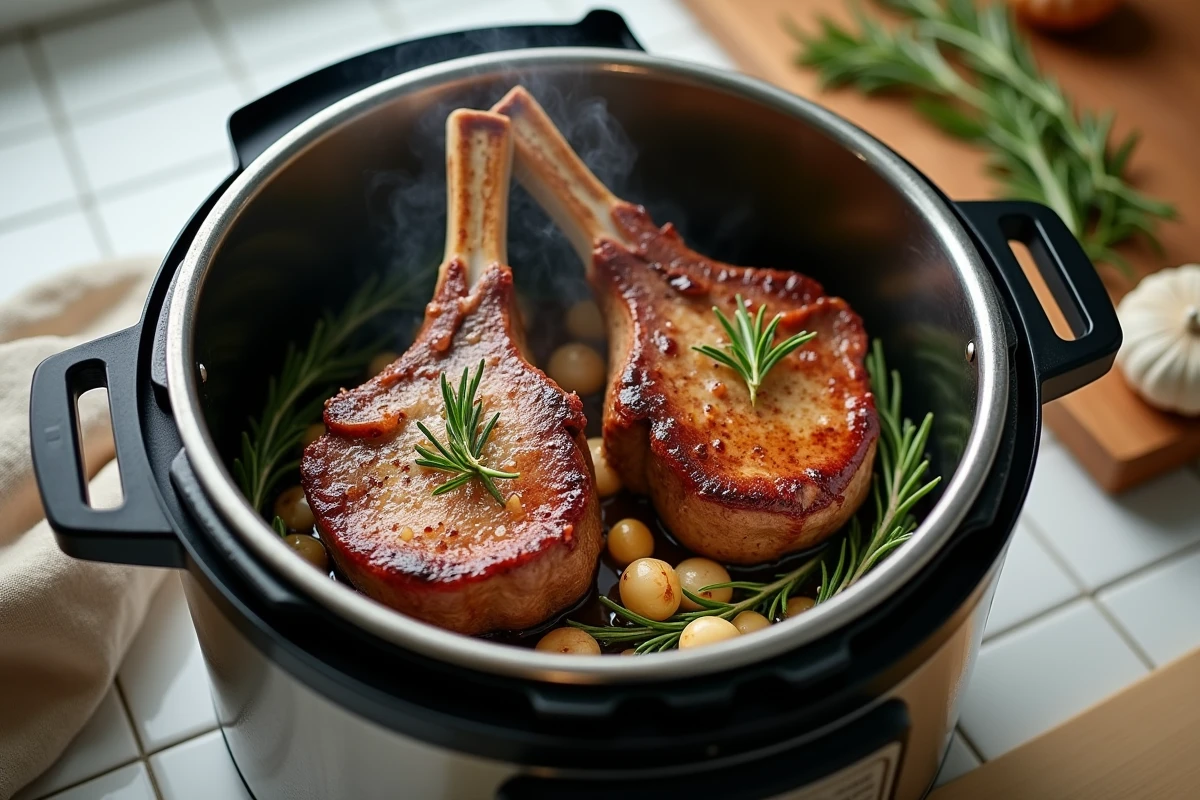
Lamb chops in the Cookeo present a recurring problem: the meat comes out either overcooked and dry, or soft with no browning. The multicooker excels at stews, but a thin cut like lamb chop requires a different approach than a navarin or a leg of lamb.
Double cooking in the Cookeo: the method that changes the result for lamb chops
Have you noticed that a lamb chop cooked solely under pressure comes out gray and crustless? That’s normal. Pressure traps moisture, preventing any Maillard reaction, that surface caramelization that adds flavor and texture.
The solution lies in a double cooking: short pressure then browning. Many multicooker users have been sharing this method for a few years, and it has proven to be the most reliable way to achieve meat that is pink inside with a beautiful golden crust outside.
Specifically, the first step is to place the chops in the pot with a bit of liquid (broth, white wine, or simply water) and start a very short pressure cooking cycle. The goal is not to cook the meat completely, but to relax the fibers without drying them out.
Next, open the Cookeo, drain the remaining liquid, and switch to “browning” mode (or use the Extra Crisp lid for compatible models). This final searing on a well-heated pot, with a drizzle of olive oil, creates the crust in just a few minutes. To delve deeper into cooking lamb chops in the Cookeo with the Extra Crisp, the principle remains the same: pressure tenderizes, and the grilling mode finishes it off.
Internal temperature of lamb chops: the true cooking criterion
The cooking time displayed in a Cookeo recipe is a guideline, not a guarantee. The thickness of the chops, their starting temperature (straight from the fridge or at room temperature), and the amount of liquid in the pot can affect the result.
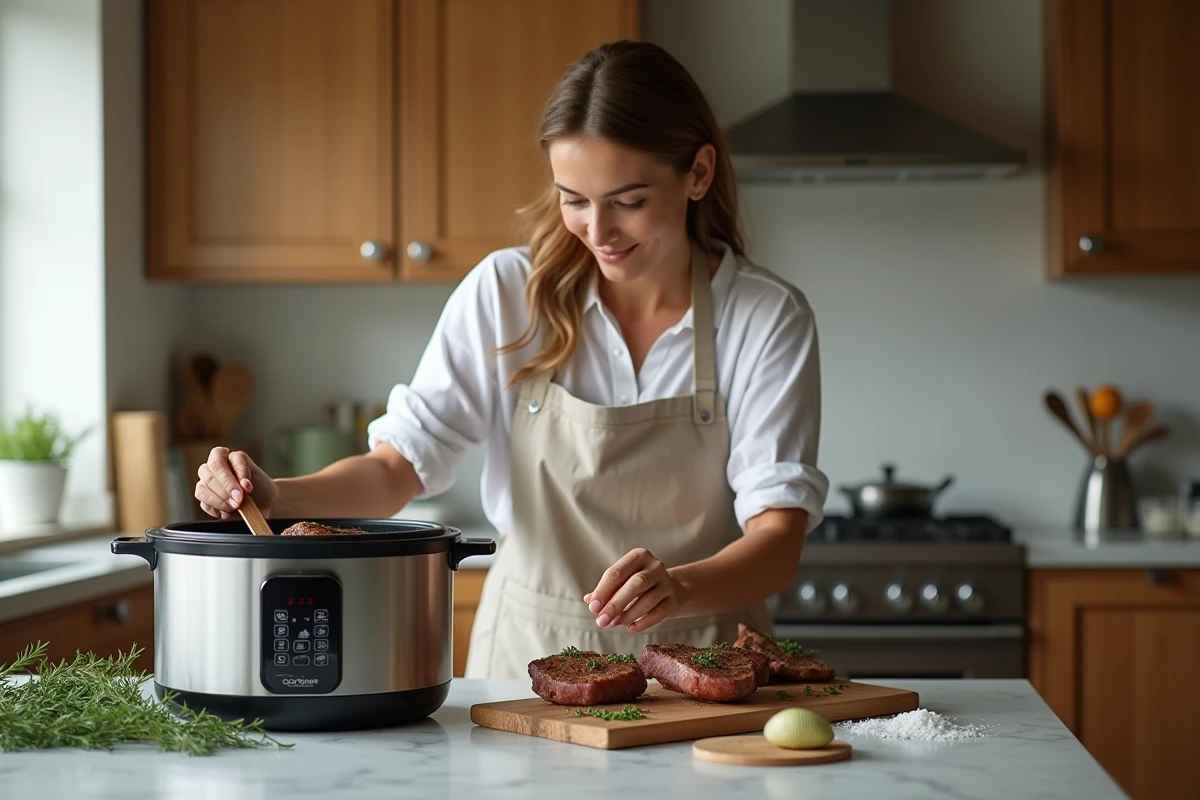
Sheep industry organizations and several culinary schools recommend relying on the internal temperature of the meat rather than just the timer. A probe thermometer, inserted into the thickest part of the chop after opening the Cookeo, provides a reliable reading.
Temperature guidelines based on desired doneness
- Medium-rare (the most sought after for chops): aim for around 60 to 63 °C at the core. The meat remains juicy, slightly pink in the center.
- Medium: between 65 and 68 °C. The pink disappears, but the chop retains tenderness if it hasn’t been compressed under pressure for too long.
- Well done: above 70 °C. Suitable for those who prefer a firm cook, but beware of drying out such a thin cut.
A probe thermometer costs just a few euros and eliminates guesswork. It is a more useful tool than any time chart by weight, especially for individual pieces like chops.
Seasoning and cooking base: what makes the difference in the Cookeo
Pressure cooking concentrates flavors. This is an advantage for a navarin with carrots but can be a trap if the cooking base is bland or too salty. The liquid added to the pot not only creates steam: it flavors the meat from the inside.
Here are some concrete ideas for a cooking base suitable for chops:
- A glass of dry white wine with a sprig of rosemary and two crushed garlic cloves. The wine adds acidity that balances the fat of the lamb.
- Homemade vegetable broth (or store-bought, low-salt) with fresh thyme and a drizzle of lemon juice added after cooking.
- Water with a spoonful of whole grain mustard and a few mint leaves, for a fresher version suitable for spring.
The liquid should never cover the chops: a base of two to three centimeters is sufficient. Too much liquid drowns the meat instead of steaming it under pressure.
Searing before or after pressure cooking
Some recipes recommend searing the chops in “browning” mode before starting the pressure. This step adds color, but it lengthens the handling time, and the meat ends up cooking twice at high temperature. With thin chops, the risk of drying out increases.
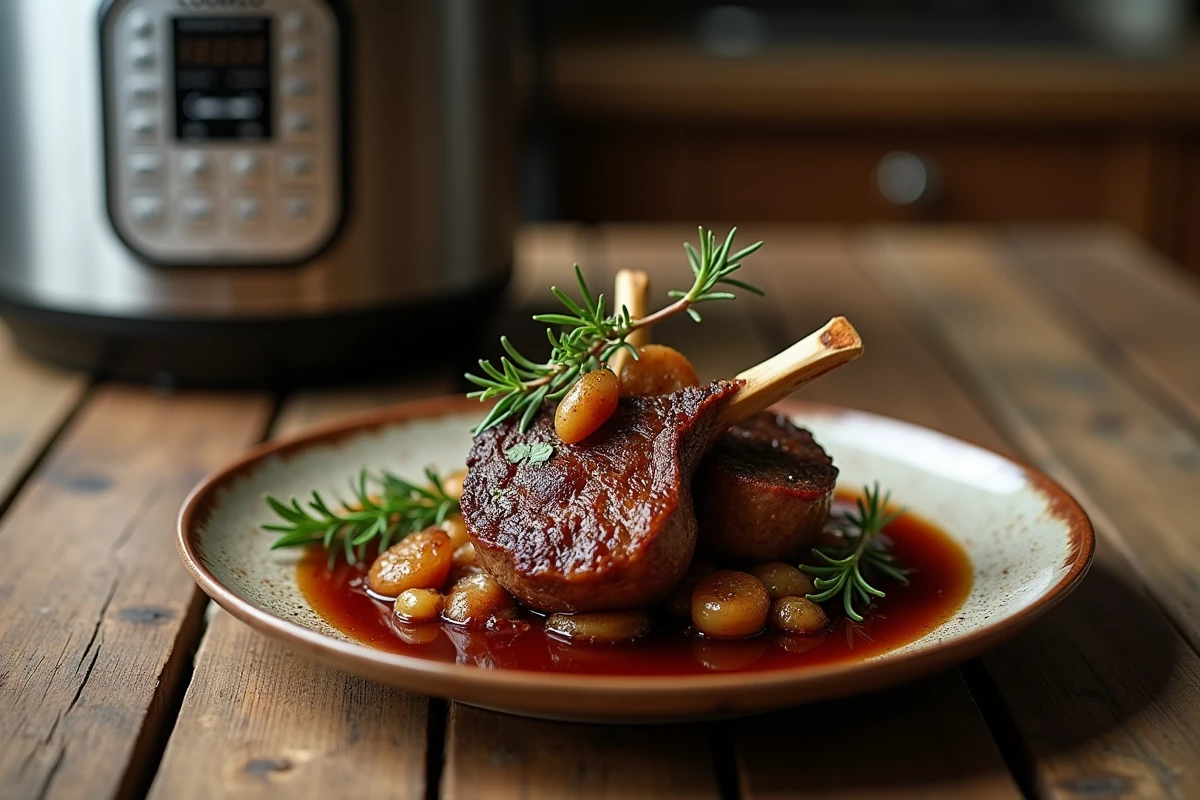
Searing after pressure cooking gives better control over the final cooking. The meat is already tender; it just needs to be marked quickly, one to two minutes per side, on a very hot pot. The result is more consistent.
Lamb chops in the Cookeo: common mistakes to correct
Why do some chops come out rubbery despite moderate pressure time? Three causes often recur.
The first: leaving the meat under pressure during natural depressurization. The Cookeo takes several minutes to release steam on its own, and during that time, cooking continues. For lamb chops, it’s better to use quick steam release right at the end of the cycle.
The second: stacking the chops in the pot. When piled, they cook unevenly. Arrange them flat, in a single layer. If you’re preparing a lot, do two batches rather than one compact load.
The third: taking the chops directly from the refrigerator. Cold meat put under pressure experiences thermal shock that contracts the fibers. Letting the chops sit at room temperature for about twenty minutes before cooking significantly improves tenderness.
The success of lamb chops in the Cookeo relies less on the recipe itself than on managing pressure time and temperature. A short pressure, a probe check, and a final sear in browning mode form the most reliable combination for achieving meat that is both tender and golden, without constant supervision.