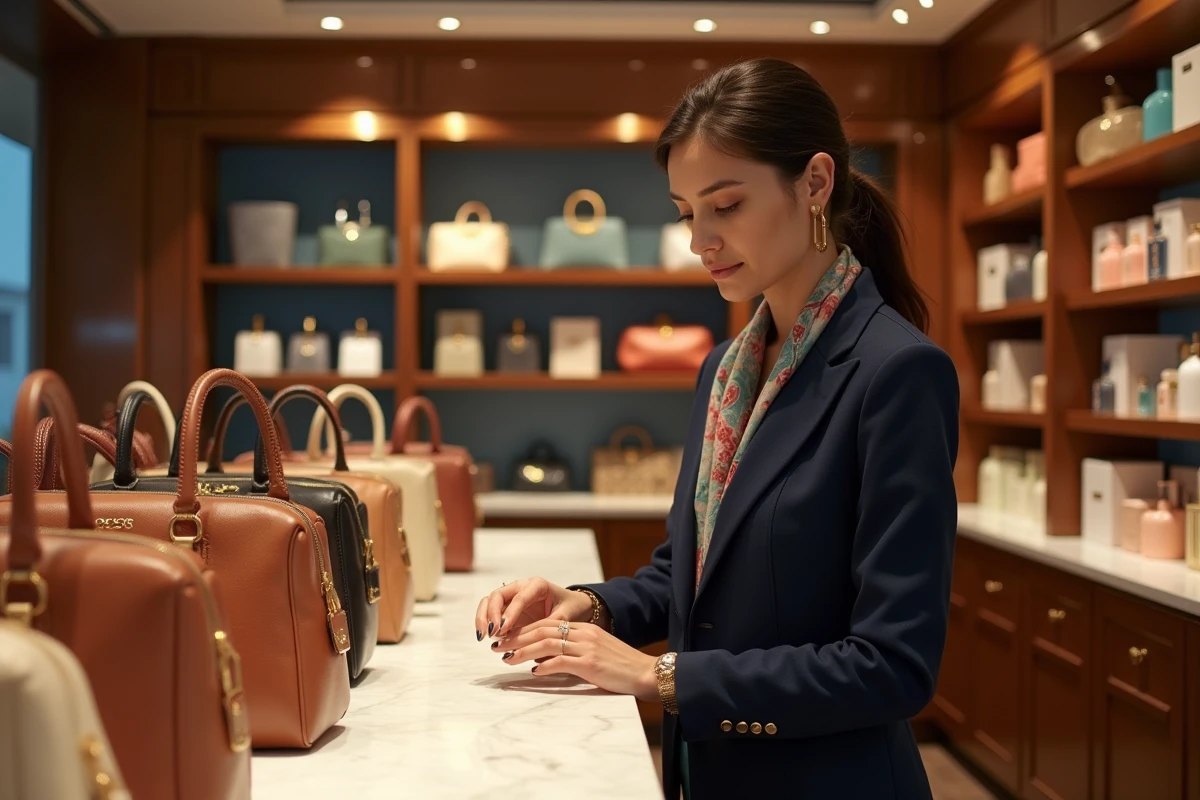
9%. This is the organic growth reported by LVMH’s Fashion and Leather Goods division in the first quarter of 2024. At the same time, Wines and Spirits are down by 12%. Perfumes and Cosmetics are up by 7%, while Selective Distribution remains stable. Regionally, Asia, excluding Japan, significantly outperforms Europe and the United States in terms of dynamism.
Some segments at LVMH manage to maintain their profitability despite the uncertain climate weighing on the global luxury market. The group’s results illustrate a capacity to reinvent itself, which continues to attract the attention of investors and financial analysts.
LVMH Facing the Challenges and Opportunities of the Luxury Market in 2024
The journey of the world’s leading luxury brand is not limited to the accumulation of records. Under the leadership of Bernard Arnault, LVMH navigates a complex international environment marked by a lackluster demand, especially from the Chinese side. Asia accounts for 34% of sales, followed by the United States and Europe, each representing 26%. While the Chinese market, long a driver, shows some signs of fatigue, geopolitical uncertainties and currency volatility require heightened vigilance.
To move forward, the Arnault family is betting on sector diversification and a strategy of selective acquisitions. This approach combines vertical integration and constant innovation. The LIFE 360 program embodies the group’s commitment to social responsibility, whether it involves limiting greenhouse gas emissions, preserving biodiversity, or managing water more sustainably. LVMH is also enhancing its digital transition, relying on omnichannel commerce and technologies such as blockchain, NFTs, and virtual reality. The goal? To enrich the customer experience and ensure product traceability.
The second-hand market is gaining momentum, digitalization is advancing rapidly, and the arrival of Millennials and Gen Z is shaking up industry routines. In the face of the threat of stagnation and international instability, innovation remains the key to success. LVMH’s revenue according to cBusiness highlights the strength of the group’s Houses and its ability to anticipate changes. A resilient model, certainly, but one that requires ongoing trade-offs between external development, creativity, and adaptation to global market demands.
Which Sectors Generate the Highest Profitability for LVMH This Year?
The cornerstone of profitability at LVMH remains undoubtedly the Fashion & Leather Goods division. Louis Vuitton, Dior, Fendi: these names embody the group’s appeal and concentrate the majority of the margins. In 2024, leather goods show growth exceeding all other sectors, driven by an international clientele seeking iconic models and limited editions, even when the context is more volatile.
The Wines & Spirits branch, Moët & Chandon, Hennessy, Veuve Clicquot, retains a strategic role. However, demand is declining in China and in certain regions of Asia, slowing progress. Nevertheless, the group’s ability to position its exceptional cuvées at high prices preserves the profitability of this segment.
For Perfumes & Cosmetics, as well as Watches & Jewelry, the situation is more nuanced. Dior, Guerlain, or Bvlgari continue to advance, particularly thanks to digital and the travel retail sector. However, value creation in these categories remains lower than that of leather goods. Finally, Selective Distribution (Sephora, Le Bon Marché) benefits from the return of tourism and a strong omnichannel network. Ultimately, LVMH capitalizes on diversity, rigorous distribution management, and innovation to solidify its performance in 2024.

Outlook for LVMH Stock: Trends, Analyses, and Issues for Investors
The performance of LVMH stock on Euronext Paris is closely monitored by investors, whether institutional or seasoned individual investors. The group, a safe bet in the CAC 40, has a market capitalization of €239 billion as of July 2025, demonstrating its influence on the global luxury scene. This position is based on a unique portfolio of 75 Houses, a rare diversity, and proven agility in the face of Asian volatility and currency fluctuations.
The LVMH stock, accessible through PEA, presents a P/E ratio of 25.3x for 2024: the market still expects solid growth despite the Chinese slowdown. The main shareholders, Christian Dior SE (41.89%) and the Arnault family (7.13%), embody stability and long-term vision, two factors valued in the stock market. The dividend of €13 per share for 2025 confirms LVMH’s ability to generate €10.5 billion in free cash flow, even in an uncertain environment.
Risks abound: potential stagnation in the sector, currency effects, geopolitical tensions. But diversification, innovation, NFTs, blockchain, virtual reality, and the CSR commitment via LIFE 360 strengthen the robustness of the model. For those looking to invest, LVMH combines yield, global reach, and solid asset strength. In the face of headwinds, the group moves forward, ready to write the next chapter of its story.