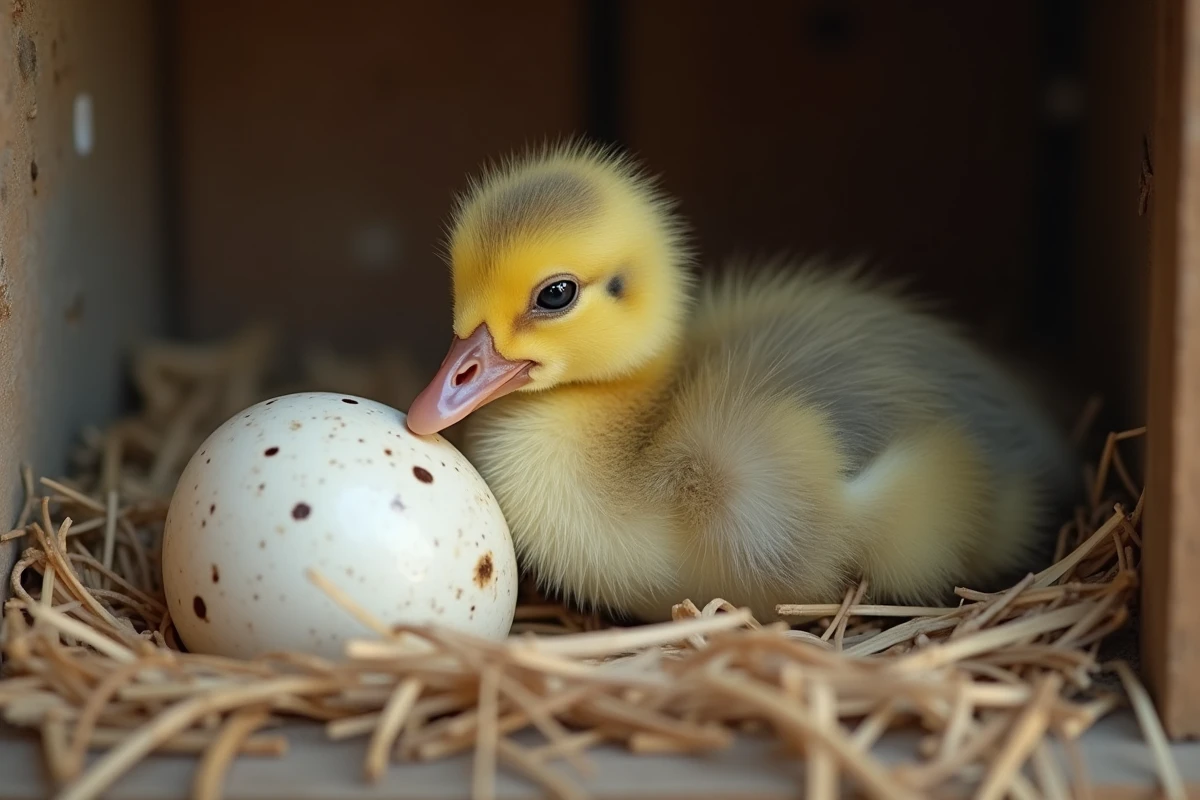
The gosling, a precocial bird, leaves the nest within hours of hatching. This early development masks a sequence where each week is crucial, particularly regarding skeletal and metabolic development. Understanding these phases helps anticipate locomotor pathologies and dietary errors that affect the viability of flocks in farming.
Photoperiod and Bone Growth in Goslings: An Underestimated Parameter
Continuous artificial light, still common in some waterfowl farms, poses a documented problem. A veterinary study (Riedstra and Nordquist, Applied Animal Behaviour Science, 2022) shows that goslings raised without sufficient darkness develop more locomotor disorders and limb deformities, despite equivalent weight gain.
We recommend a minimum of eight to ten hours of darkness per twenty-four-hour cycle starting from the first week. This extended rest promotes bone mineralization and reduces feather pecking, two critical factors for rapidly growing flocks.
In goose production, there is a temptation to extend the photoperiod to stimulate feed intake. Available data indicates that the weight gain achieved does not compensate for the degradation of walking quality. A gosling that limps at three weeks compromises the entire rearing cycle, including the subsequent fattening phase. Observing the growth of the baby goose from this perspective allows for better balancing between growth rate and skeletal robustness.
Early Dietary Transition in Goslings: Timing and Effects on Behavior
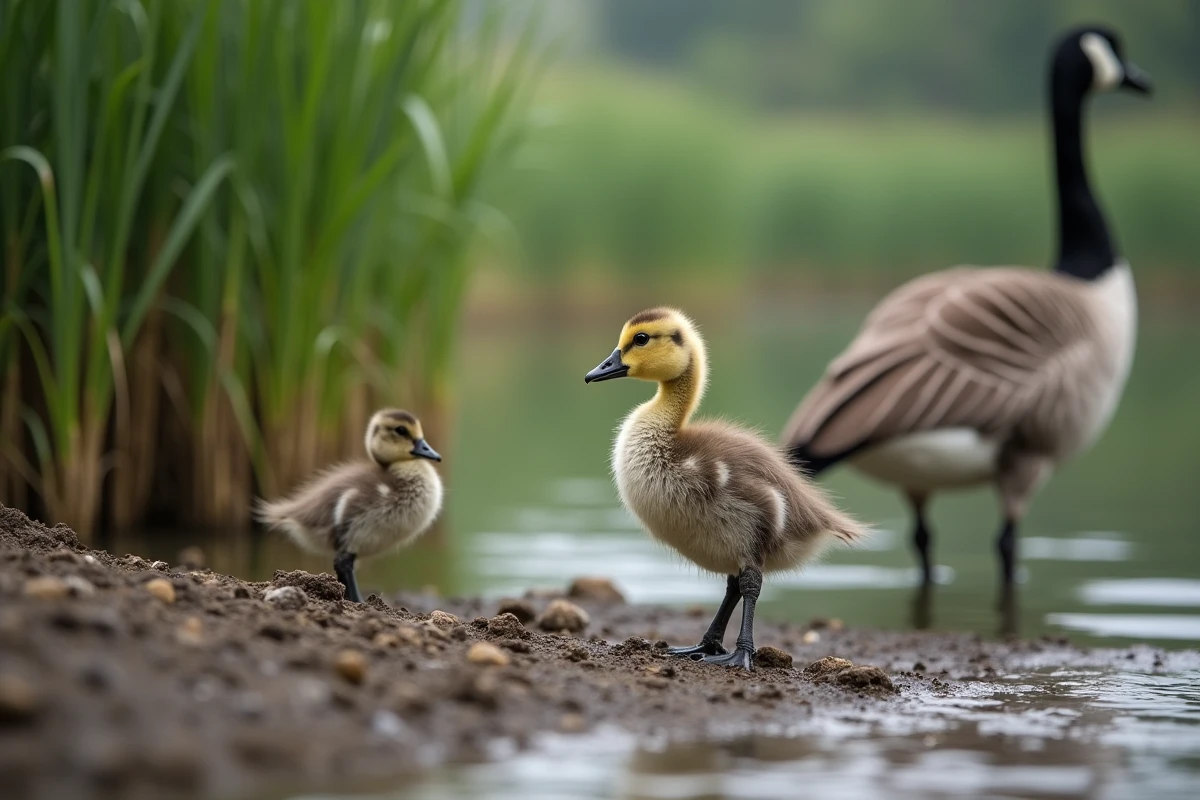
In the wild, the greylag goose guides its goslings to wet meadows from the first days, but dietary diversification remains gradual. In farming, the current trend is to introduce access to green forage as early as the second or third week of life, much earlier than what was practiced a decade ago.
This shift is not trivial. Goslings exposed early to continuous grass change their time budget: the time spent grazing significantly increases, while feather pecking decreases. This behavioral change reflects better engagement and reduced social stress within the flock.
Starter Ration and Forage Transition
During the first ten days, the starter ration (rich in protein) remains the foundation. A common mistake is to cut this ration too quickly on the pretext that the goslings “are already eating grass.” The digestive system of the young waterfowl, particularly the gizzard, is not yet developed enough to extract sufficient energy from plant fibers alone.
- Maintain the complete starter ration until the end of the second week, even if access to grass is already established.
- Gradually introduce a growth feed with decreasing protein content between the third and fifth weeks.
- Ensure that gravel (small stones) is available for free access: without it, the gizzard cannot properly grind the fibers, and the gosling loses most of the nutritional value of the ingested grass.
The goose swallows its food without grinding it in its mouth. This anatomical detail, often mentioned but rarely integrated into feeding plans, necessitates that the transition to forage is always accompanied by an intake of calibrated gravel.
Thermal Vulnerability of Goslings in the Neonatal Phase
Field studies on greylag geese nesting in Central Europe show that recent spring heatwaves are associated with a decrease in the survival of goslings in the first ten days of life. This field observation aligns with findings in farming: a gosling less than a week old poorly regulates its body temperature in both directions.
The down of the gosling provides adequate insulation against moderate cold, but it is a poor heat dissipator. Beyond a certain ambient temperature threshold, the gosling pants and reduces its feed intake, which abruptly slows weight gain at a stage where every day counts.
Practical Temperature Management in Brooders
We observe that breeders who lower the temperature in the brooder in regular increments, rather than in abrupt weekly changes, achieve more homogeneous flocks. The logic is simple: the gosling acclimates better to a continuous gradient than to a sudden change every seven days.
- First week: warm comfort zone, without direct drafts on the goslings.
- From the second to the fourth week: gradual and daily reduction of the heat source, monitoring the group’s behavior (goslings huddled together = too cold, goslings dispersed far from the source and panting = too hot).
- Beyond four weeks: most goslings tolerate spring outdoor temperatures, provided they have a dry shelter for the night.
Feather Development and Outdoor Suitability
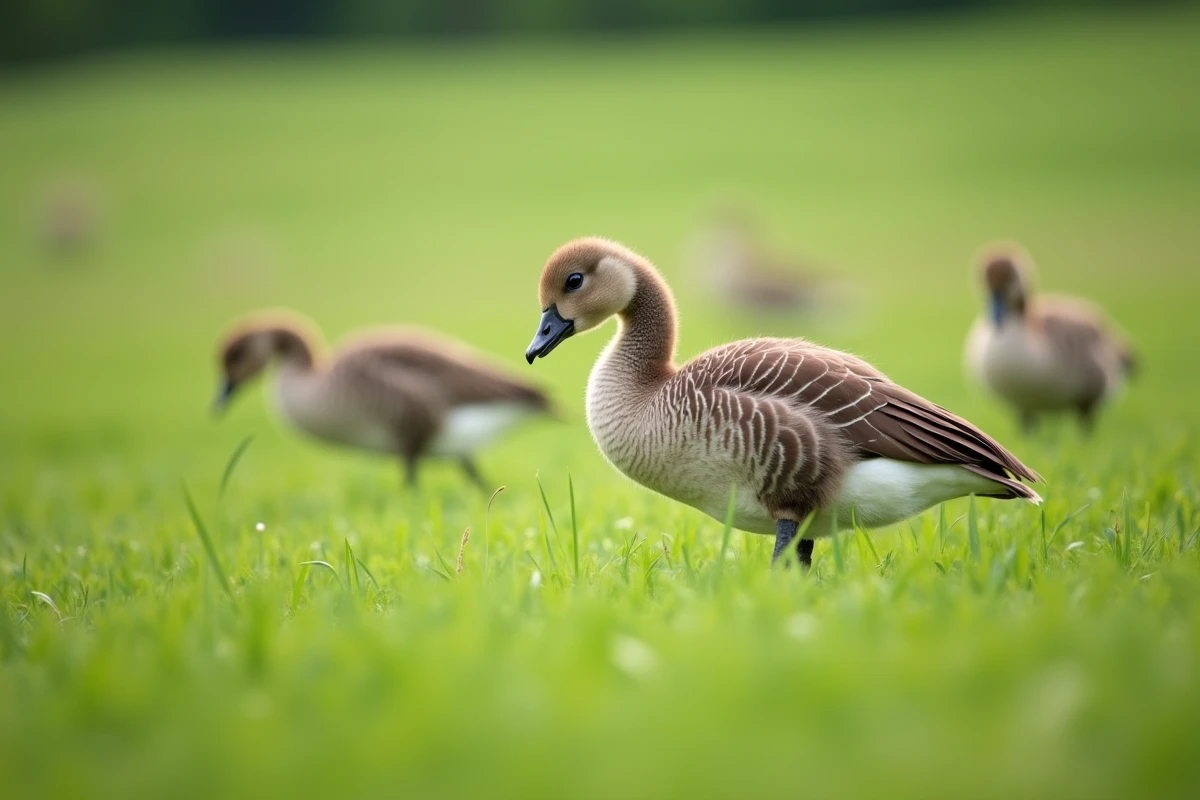
The transition from down to juvenile plumage spans several weeks and serves as a reliable indicator of physiological maturity. As long as the primary feathers have not emerged, the gosling remains vulnerable to prolonged moisture. Wet down loses most of its insulating power, unlike feathers waterproofed by the secretion of the uropygial gland, which only becomes fully functional with the definitive plumage.
Going outdoors before the cover feathers have grown exposes goslings to hypothermia in rainy weather, even under moderate temperatures. We find that losses occur less from the cold itself than from the combination of rain and wind on soaked down.
Access to a bathing water source, often recommended from the first weeks, should remain supervised until the plumage is sufficiently developed. A two-week-old gosling can bathe briefly but should not remain soaked without the possibility of drying under a heat source.
The complete development of plumage, combined with the maturity of the gizzard and stabilization of thermoregulation, marks the transition to the young adult stage. At this point, the goose can integrate into a permanent outdoor run and join the rest of the flock without major health risks, provided that flock density and access to water remain appropriate.