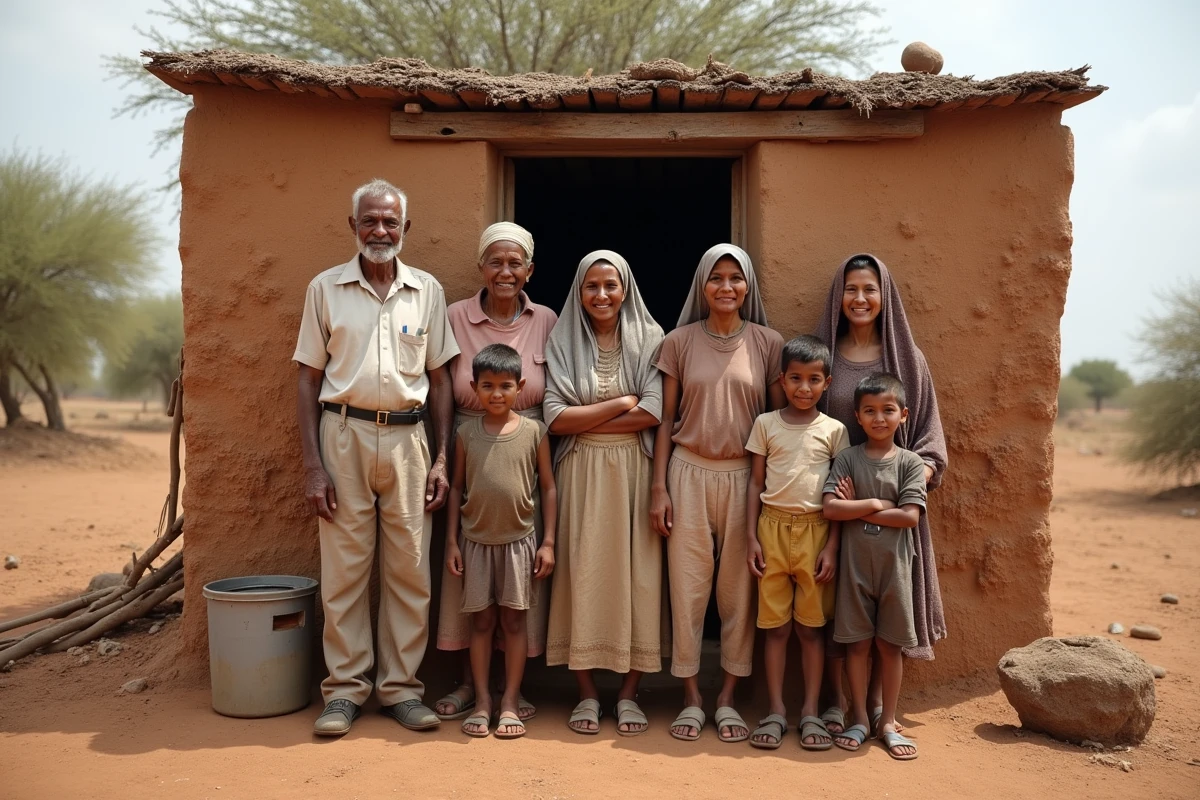
In Saudi Arabia, over 50% of unions occur between cousins. In Pakistan, some rural districts show similar rates, sometimes exceeding 60%. Regions in Sudan, Yemen, Iraq, and Iran also maintain a high prevalence of consanguineous marriages, unlike most European countries where these practices remain marginal.
These figures are accompanied by an increase in recessive genetic diseases, particularly affecting children from these unions. The incidence of certain conditions, such as thalassemia or cystic fibrosis, remains significantly higher in these populations.
Consanguinity Worldwide: Current State and Cultural Factors
In large parts of the Middle East and North Africa, consanguineous marriage is far from anecdotal. It still shapes the lives of millions of families and structures social relationships, inheritance transmission, and alliances, sometimes at the very heart of collective identity. Major demographic surveys show this: in some rural areas, more than one in two unions involve cousins or close relatives. These are powerful customs, rooted in the social fabric, that persist especially where tradition weighs heavily.
To better understand, consanguinity by country worldwide reveals a mosaic of situations. In Pakistan, Iraq, Qatar, and Morocco, the proportion of consanguineous couples is far from marginal. The journal biosocial science details how economy, religion, or simple concern for family cohesion often explain the continuation of these practices. Strengthening ties between lineages, preserving heritage, responding to group pressure: each society composes with its own logics.
In Europe, the picture changes dramatically. Here, consanguinity fades, driven by changing mindsets and the heightened vigilance of health professionals regarding the risk of genetic diseases. According to the journal human genetics, the phenomenon has almost no resonance in most Western countries, except for isolated instances, sometimes within communities of immigrants or in remote rural pockets.
Nothing is homogeneous, therefore. Practices differ according to history, economy, and culture. To grasp the reality of consanguinity by country, one must look closely, region by region, and accept the complexity of the factors at play.
Which countries currently have the highest rates of consanguinity?
Time passes, but the figures remain striking in certain states. In Pakistan, for example, the consanguinity rate reaches or exceeds 50% in several rural provinces. There, the union between first cousins is not an exception but a social norm, often motivated by the desire to keep property within the family and ensure the strength of alliances.
On the side of Qatar and other Middle Eastern countries, the trend remains pronounced. According to the egyptian journal medical, over 30% of marriages involve individuals from the same family circle. Morocco follows, with peaks in certain rural areas and southern urban centers, where tradition still outweighs health warnings.
Here are some concrete examples from the most recent studies:
| Country | Estimated consanguinity rate |
|---|---|
| Pakistan | >50% in certain regions |
| Qatar | 30 to 40% |
| Morocco | 15 to 25% (up to 40% locally) |
In Europe, the situation changes completely. In France, for example, consanguinity remains on the margins, reserved for a few families or groups from recent immigration. Analyses from the journal biosocial science confirm this: on the continent, the phenomenon declines year after year.
Genetic Diseases, Public Health: What Are the Consequences for Affected Populations?
When consanguinity becomes entrenched in a population, the risks soon manifest. The works of the journal human genetics and the journal medical are clear: children from consanguineous couples exhibit more rare diseases and hereditary disorders. Metabolic disorders, immune deficiencies, recessive diseases—the list grows, and the likelihood of facing these issues skyrockets. According to the journal biosocial science, the risk of hereditary conditions can double or even triple in these contexts.
Health professionals must then deal with a much more complex reality. In areas where consanguineous marriages are common, early screening becomes a major issue. Medical follow-up intensifies, diagnoses multiply, and treatments are sometimes nonexistent. Families find themselves facing a heavy psychological and material burden.
The main observed impacts are as follows:
- Increase in the number of rare diseases
- Psychological burden on families
- Mobilization of specific medical resources
In the face of these challenges, public health is gradually adapting. In Pakistan, Morocco, and throughout the Middle East, genetic consultations are emerging, attempting to limit the consequences for future generations. Research from the journal medical human reminds us that prevention remains the most solid measure to protect children of consanguineous couples from the most severe hereditary diseases. The road will be long, but every progress counts, for every spared family, for every child who escapes the heavy legacy of shared genes.