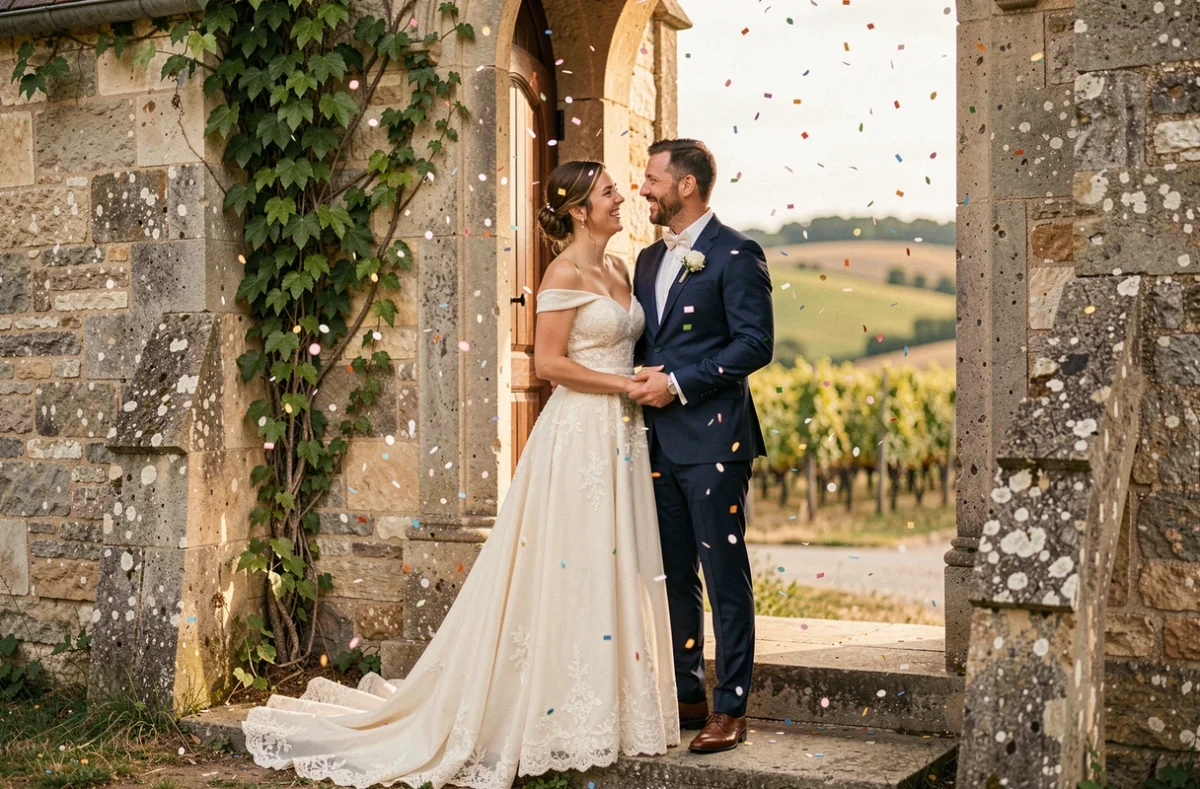
Planning a wedding means making dozens of decisions in just a few months. The venue, ceremony, budget, guest arrangements: each decision leads to another. Before thinking about decorations or the playlist, two points deserve early attention.
The first is administrative: the town where the civil ceremony takes place must have a lasting connection to one of the future spouses or one of their parents (residence or domicile). The second is financial: going over budget is common, so it’s wise to set aside a contingency fund rather than rely on an optimistic overall budget.
Venue accessibility: a selection criterion, not a last-minute addition
Have you ever visited a beautiful venue only to find that its spiral staircase made the upper floor inaccessible to some of your guests? This is a common scenario. Choosing a reception venue means checking its permitted capacity for your specific setup (seated dinner, standing cocktail reception, dance floor), as well as how accessible it really is for people with disabilities.
Safety and accessibility requirements depend on the venue’s status as a public-access building (ERP) and its operator. In practical terms, this means that access to restrooms, door widths and the availability of a wheelchair-accessible route are not matters of goodwill on your part, but features of the venue itself.
To make sure a wedding according to Les Secrets de la Mariée remains a celebration everyone can share, ask these three questions during your first visit:
- Can guests reach the restrooms without steps or narrow passageways, including wheelchair users?
- Can the seating plan leave enough space between rows for a guest with limited mobility to move around independently?
- Does the sound system support a hearing loop or adjustable volume for guests who are hard of hearing?
Considering accessibility when choosing the venue avoids last-minute workarounds. Guests who feel welcome without any fuss will have a better evening—and so will you.

Civil and symbolic ceremonies: two moments not to confuse
In France, only a civil marriage ceremony conducted by a civil registrar has legal standing. A symbolic ceremony held at the reception venue, however moving, is just that: symbolic. And a religious ceremony cannot take place before the civil ceremony at the town hall.
This distinction has practical implications for the day’s schedule. If the town hall is some distance from the reception venue, allow a realistic amount of time for travel. Many couples underestimate the journey, especially when the wedding party is travelling in several vehicles.
When to submit your paperwork to the town hall
Your birth certificate’s validity is assessed when you submit your paperwork, not on the date of the ceremony. If you submit your paperwork six months before the wedding, your birth certificate must be valid on that date. Request your birth certificate at least two months before submitting your paperwork.
One detail that the stress of wedding planning can sometimes make you forget: the banns must be posted for ten days. There’s no speeding up the administrative timeline, even when everything else is moving faster.
Wedding budget: plan by category rather than setting one overall figure
Setting a total budget can be reassuring, but this approach hides the real trade-offs. Couples who set an initial budget often end up exceeding it, sometimes by a significant amount. The reason is simple: quotes add up, each vendor offers options, and the total grows through a series of small additions.
Comparing quotes category by category is more effective than setting an overall spending cap. A caterer charges per guest, a photographer by the half-day or full day, and a florist based on the varieties you choose. These different pricing structures can make an overall comparison misleading.
Three areas where there’s room to negotiate
- Catering, especially if you reduce the number of cocktail-hour bites to focus your budget on the seated meal
- Floral decorations, by choosing seasonal flowers instead of imported varieties that can triple the cost
- Photography, by clearly defining which moments you want covered rather than booking a full-day package when you’ll only use some of the photos
Setting aside a contingency fund, even a modest one, helps cover unexpected costs without compromising your most important choices.
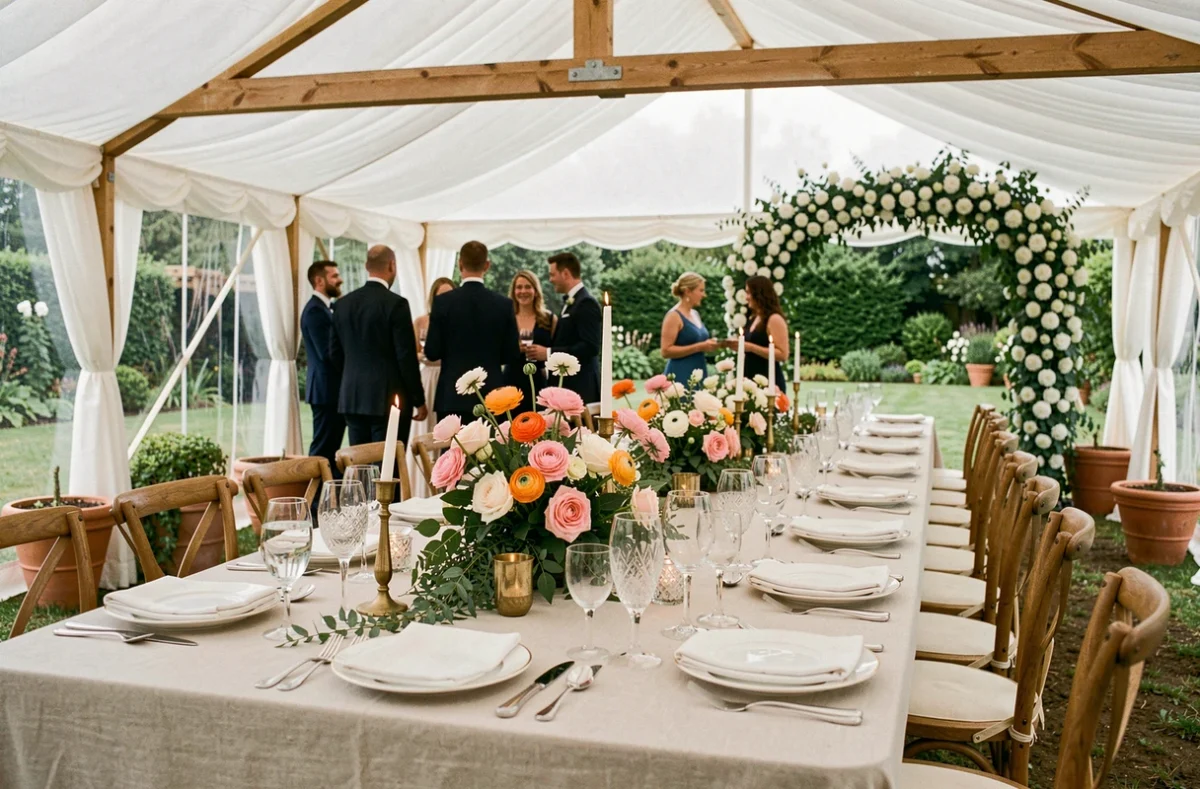
Wedding theme and decorations: start with the couple, not a mood board
Other articles offer lists of themes. The problem with a list is that it encourages you to choose an existing theme rather than create your own. An effective wedding theme starts with a thread that’s personal to the couple: a meaningful place, a color that features regularly in your everyday life, or a dish you cook together.
A cohesive theme should be reflected in no more than three elements: stationery, table decorations and one striking visual feature (an arch, photo booth or signage). Beyond that, too many details dilute the effect and drive up the budget.
The most memorable decorations often tell a specific story. A head table lined with books the couple has actually read makes a stronger impression than a generic rented centerpiece.
Wedding photos: set expectations before the big day
It’s not about how many photos you receive, but what you want to relive. Make a list of five specific moments you absolutely want captured: exchanging rings, entering the reception room, or a look between the newlyweds during a speech by one of the wedding party.
Share this list with your photographer in advance. A photographer who’s been briefed captures the right moments without interrupting the flow of the day. Group photos are best scheduled with a set order (immediate family, friends, colleagues) to avoid the twenty minutes of downtime that can disrupt the evening.
The final point that’s often overlooked is the venue’s lighting. A château with narrow windows or a stone-vaulted room presents real technical challenges. Discuss the venue with your photographer before the big day so they can adapt their equipment—not the other way around.