
Blue is gradually fading from its dominant position in pool catalogs. Colors that have long remained confidential are now appealing to an increasingly broad audience. Manufacturers are multiplying their offerings, with each shade influencing not only style but also practical aspects: water temperature, ease of cleaning, and integration into the garden.
Choosing the color of your pool is no longer just a matter of a simple crush. The environment, local regulations, soil type, and sunlight exposure play a decisive role. These technical criteria come into play in the decision-making process and sometimes challenge aesthetic preferences. Faced with an abundance of options, the decision becomes a true balancing act.
Overview of pool colors: liners, shells, and tiles, what possibilities?
Forget the monotonous color chart of the past. Today, liners, polyester shells, and tiles offer a variety of shades that has never been so rich. From azure blue to mineral gray, from bright sand to deep black, each covering offers its visual signature and its own constraints. The liner, highly appreciated for its flexibility and the abundance of available colors, adapts well to both new pools and renovations. On the tile side, mosaics open up a world of reflections, gradients, and patterns that strongly personalize the final look.
On the shell side, pool shell colors are now a standard for those wanting a unique basin. Manufacturers play with shades that alter the perception of water and integrate better into the surrounding landscape. An anthracite gray creates a contemporary and deep ambiance, while pure white enhances the clarity and light of the pool. Sand or beige shades are flourishing, reproducing a natural lagoon effect, perfect for complementing a wooden terrace or a Mediterranean garden.
The context changes the game. A site that is very exposed to the sun will reveal a color differently than a shaded garden. An intense blue in a less sunny area can quickly seem cold, while a black covering will absorb heat but make impurities more visible. It’s also wise to consider the durability of the pigments, ease of maintenance, and how trends evolve. Choosing a color is not just about appearance: it conditions the experience, value, and longevity of the pool.
How color influences ambiance, perception of water, and integration into the garden?
The color of the shell directly influences the atmosphere of the pool. A light blue inspires freshness and a transparency that evokes tropical waters, instantly inviting relaxation. Conversely, a deep gray or black gives the pool a sophisticated mirror effect, reflecting light and the environment, creating a more urban or highly designed ambiance. But aesthetics do not explain everything: the depth of the pool, shade, and light intensity modify the final perception of the chosen color.
Natural light literally transforms the appearance of the pool. In Marseille, a sandy pool radiates a bright turquoise under the sun. In a more shaded corner, the same shade will take on softer, more muted reflections. The visual effect therefore depends on exposure, the type of ambiance sought—lagoon, contemporary water body, discreet cocoon—and the dialogue with the rest of the garden.
Here’s how different shades play their role in the outdoor space:
- Light colors visually enlarge the pool, highlight the clarity of the water, and integrate perfectly into bright environments.
- Dark shades enhance perceived depth, warm the water more quickly, and add character to the pool’s architecture.
- Sand or ivory shades create a soft look, in harmony with the vegetation and natural elements of the garden.
The secret to a successful result? Harmonizing the color of the shell with the plants, decks, and coping stones. This visual coherence enhances the outdoor space and transforms every swim into a special moment.
Practical tips for choosing the ideal shade according to your desires and your environment
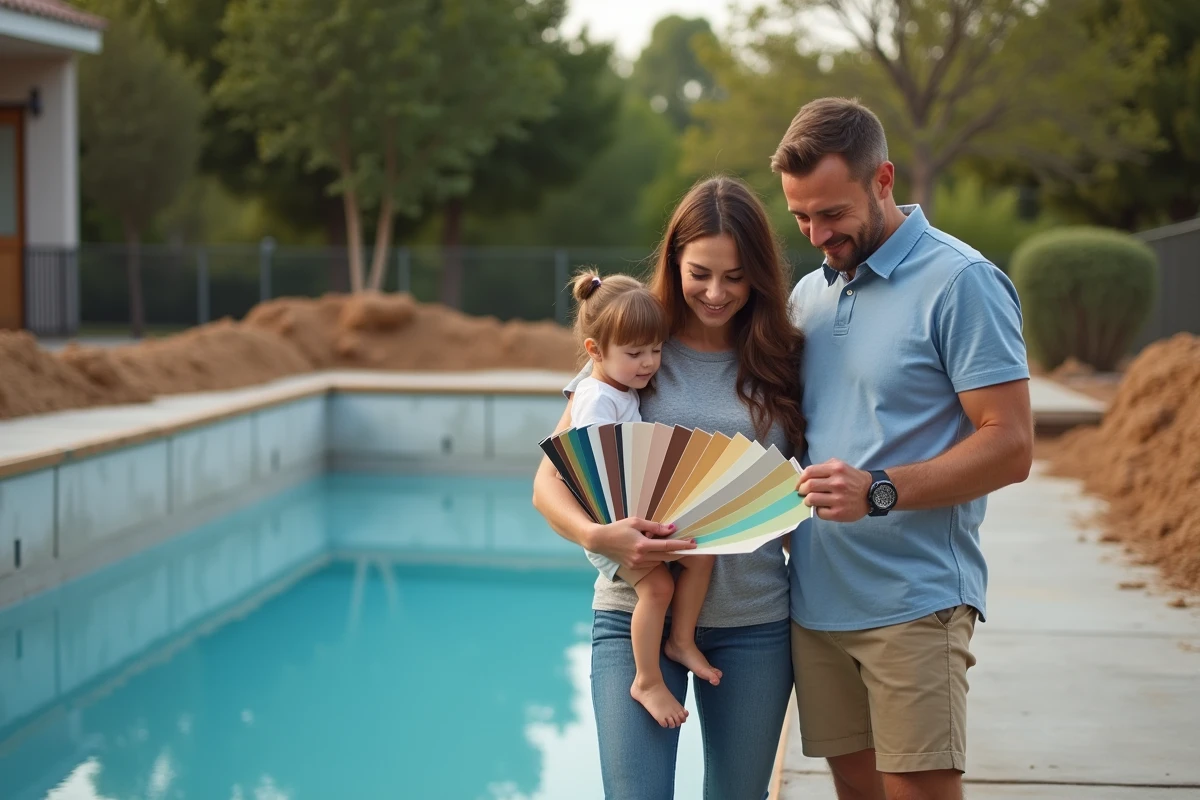
Choosing a pool shell color requires observation and reflection. Start by analyzing the exposure of your land. If the sun is omnipresent, dark colors will reveal their depth and allow the water to gain a few degrees. Conversely, a more shaded space will benefit from light tones, which will enhance the feeling of cleanliness and clarity, even on gray days.
Also consider the overall ambiance of the garden. Dense vegetation naturally pairs with a sand or ivory shell, extending the softness of natural materials. A garden with modern lines or a mineral dominant will better match an anthracite gray or deep blue, for a pool that becomes a true mirror.
Maintenance deserves attention. On a light shell, dirt is quickly noticeable, which is practical for preventive maintenance but demanding on cleaning frequency. Dark colors, on the other hand, better mask marks but can raise the water temperature during summer heat peaks.
Ultimately, it all depends on your desires, your lifestyle, and how you envision enjoying your shell pool. Family swims, gatherings with friends, contemplative pauses, or seeking a lagoon ambiance: each shade tells a different story and leaves its mark on your summer memories. It’s up to you to choose the tone that reflects you, the one that will make your garden vibrate in every season.