
Entrepreneurship in France is underpinned by a steady flow of new business creations, driven by a large number of micro-entrepreneurs and rapidly changing industries. People starting a business today face new requirements (e-invoicing, environmental standards) and tools that are changing how they test, finance and structure their ventures.
E-invoicing: a requirement reshaping how businesses get started
Among the practical changes affecting all new business owners, mandatory e-invoicing is something to factor in from day one. According to CMA Île-de-France, which held an information session in September 2026, all businesses covered by the rules must be able to receive electronic invoices in line with the current timetable.
For anyone starting a business, this means choosing compatible software before making the first sale. The issue is not just regulatory: moving to an electronic format helps structure accounting, makes cash flow easier to track and reduces data-entry errors. Treating this requirement as an organizational advantage rather than an administrative chore can deliver operational benefits from the very first months.
Entrepreneurs who keep up with the latest news from Entrepreneur Land can regularly find explainers on regulatory deadlines like this, helping them avoid being caught off guard by a new requirement.
Innovation in SMEs: from rapid testing to structured management
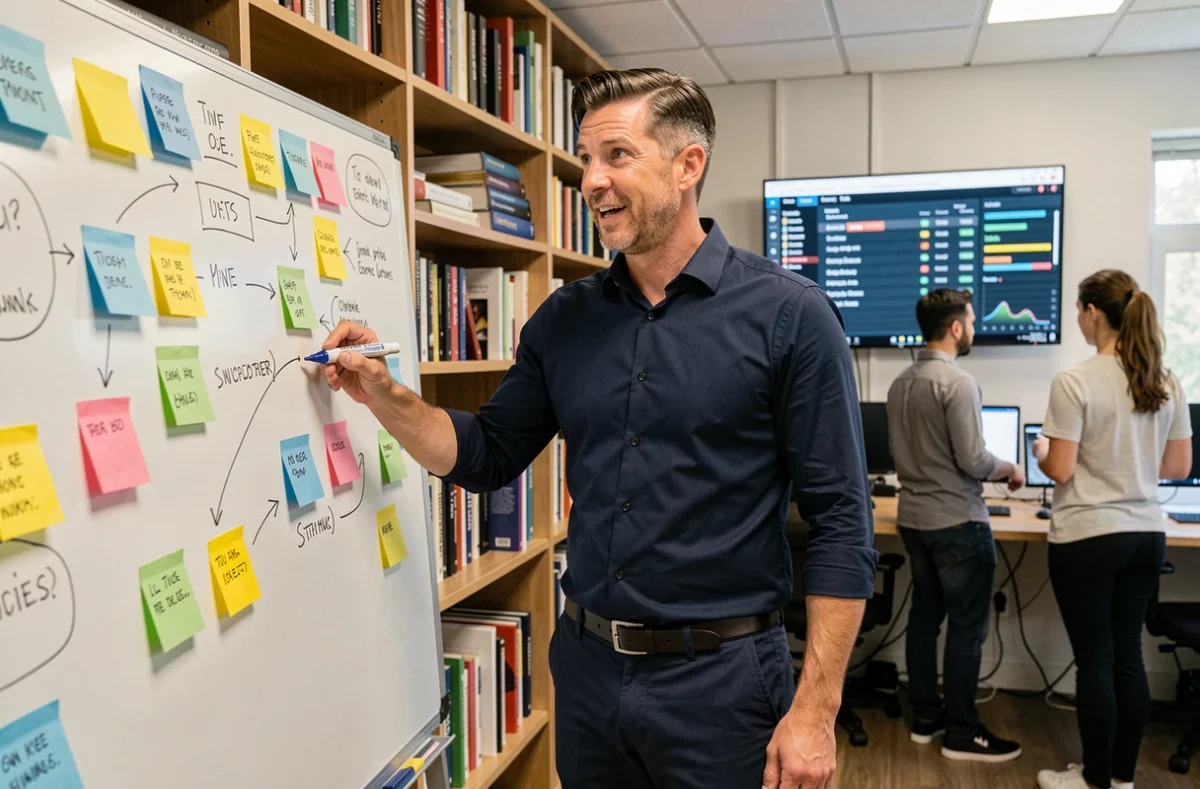
Innovation is no longer just about coming up with an original idea. A case study published by Bpifrance Conseil in October 2026 shows that the business leaders it supports are increasingly seeking help to prioritize investments and manage several projects at once. The approach described focuses on rapid testing, measuring results and reallocating resources based on what works.
This shift in approach also applies to new businesses. Launching a minimum viable product, gauging the market response, then deciding whether to invest or pivot: this experimental approach reduces financial risk. However, it requires a level of monitoring discipline that many founders underestimate.
What this means for a business in the startup phase
Before writing a fifty-page business plan, testing an offer with a few real customers can help validate—or disprove—the initial assumptions. The cost of a test is low compared with the cost of a full launch based on an untested assumption.
Bringing teams together around a pilot project rather than a fixed plan encourages engagement. Business leaders supported by Bpifrance Conseil note that this approach also makes it easier to make budget decisions along the way.
Impact startups: scaling up is the real challenge
The 2026 Mapping of French impact startups, published on October 8, 2026, by Bpifrance, France Digitale and Impact France, reports growth in this ecosystem. The key finding is not the number of new organizations, but the diagnosis: the main challenge is shifting from starting up to commercialization and scaling.
Large corporations and public procurement are identified as potential customers that could help these startups grow. For impact-driven founders, this means that financial viability no longer depends solely on grants or innovation awards, but on the ability to sell to institutional buyers.
- Develop a commercial offering tailored to public tenders, with the certifications and track record buyers expect.
- Identify large corporations that incorporate impact criteria into their purchasing, as not all sectors are moving at the same pace.
- Anticipate cash flow needs arising from public-sector payment terms, which are often longer than those in the private sector.

Business acquisition: an underestimated path to entrepreneurship
Starting a business from scratch is not the only option. Acquiring an existing business provides immediate access to a customer base, expertise and sometimes an operational production facility. Available data point to financing and a lack of forward planning as the main challenges faced by business buyers.
Lack of forward planning affects both the seller and the buyer. A business owner who leaves succession planning too late has little time to train their successor, stabilize the team and reassure business partners. For buyers, underestimating post-acquisition working capital requirements remains a common mistake.
What businesses are available to acquire?
Craft businesses and regional industrial SMEs represent a significant pool of potential acquisitions. The retirement of business owners without a family successor is driving this market. For someone with experience in a particular industry, acquiring a profitable business that needs a strategic refresh can be faster and less risky than starting from scratch.
Artificial intelligence and entrepreneurship: beyond the hype
According to data shared by Propulse by CA, nearly half of French people will be using AI in 2026, an increase of 28 percentage points in two years. For entrepreneurs, AI is no longer a marketing talking point: it is a production tool. Automating customer relations, generating data analysis or optimizing logistics are practical applications that reduce fixed costs.
The software and digital services market in France is expected to reach 70 billion euros in 2026, amid a renewed focus on digital sovereignty. Founders developing alternatives to American platforms are finding favorable conditions, supported by growing demand for French products and services.
Made in France remains a point of differentiation. More than two-thirds of French people say they spend over 500 euros a year on products made in France. For entrepreneurs, positioning an offering around local manufacturing or a nearby service meets a measurable demand, provided the business model can support the associated production costs.
The trends shaping entrepreneurship in 2026 cannot be summed up as a list of promising industries. E-invoicing calls for sound management from the outset, innovation is driven by experimentation rather than theoretical plans, and acquiring a business offers a practical alternative to starting from scratch. What these developments have in common is that they reward founders who move quickly from intention to measured execution.